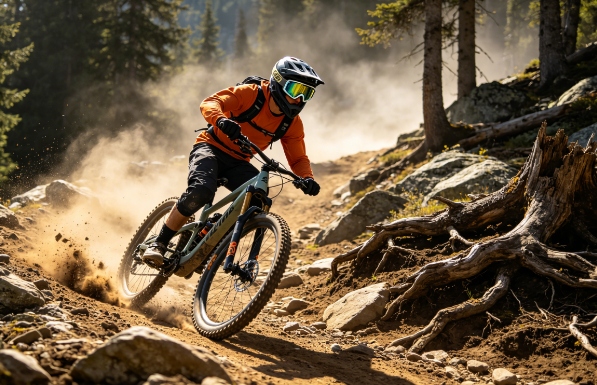
Mountain biking is a demanding outdoor sport that requires a combination of speed control, terrain awareness, and precise visual judgment. Riders must constantly adapt to changing environments such as bright sunlight, shaded forests, dusty trails, and unpredictable weather conditions. In such situations, high-performance eyewear becomes an essential part of cycling equipment rather than just an accessory. The best MTB glasses are designed to enhance visibility, protect the eyes, and improve comfort during long rides. Many professional riders also rely on a trusted MTB glasses manufacturer to ensure their eyewear meets strict standards for durability, optical clarity, and off-road performance.
Key Performance Features That Define High-Quality MTB Glasses
The best MTB glasses are not defined by style alone but by a combination of functional features that directly impact riding performance.
Optical clarity and lens technology
- High-definition lenses enhance terrain recognition capabilities, helping riders more clearly identify rocks, roots, and uneven surfaces.
- Contrast-enhancing coatings improve depth perception, especially on mixed-light trails.
- UV400 protection ensures long-term eye safety during extended outdoor exposure.
Impact resistance and safety protection
- Polycarbonate lenses are commonly used due to their ability to resist impact from debris and accidental falls.
- Scratch-resistant coating keeps your sight clear after constant use on trails.
- Reinforced lens structures reduce the risk of breakage during high-speed riding.
Adaptive light control
- Photochromic lenses automatically adjust to changing light conditions.
- Anti-glare technology reduces brightness from reflective surfaces such as wet rocks or roads.
- Balanced tint levels ensure visibility in both sunny and shaded environments.
These features work together to ensure consistent visual performance across diverse mountain biking conditions.
Comfort and Fit for Long-Distance Riding
Even the most advanced lenses are ineffective if the eyewear is uncomfortable during extended use.
- Lightweight frame construction: Helps ease pressure on the nose and ears, allowing the cyclist to focus for extended periods during uphill and downhill rides.
- Ergonomic wraparound design: Provides a wider field of vision and prevents side light interference from entering the eyes.
- Anti-slip stability system: The rubber nose and temple grips keep the glasses from slipping due to movements and vibrations.
Comfort-focused design allows riders to concentrate fully on trail performance without frequent adjustments or distractions.
Ventilation and Fog Prevention Systems
Fogging is a common issue in mountain biking, especially during intense rides or sudden temperature changes.
Airflow optimization
- Built-in ventilation channels allow continuous airflow across the lens surface.
- Right ventilation prevents the build-up of heat and moisture when going uphill.
- Balanced design provides ventilation without sacrificing protection against dust and other foreign objects.
Anti-fog coatings
- Hydrophilic coatings prevent condensation from forming on the lens.
- Stable visibility is maintained even in humid or rainy environments.
- Reduced fogging improves reaction time on technical trails.
Environmental adaptability
- Consistent performance is achieved despite changes in temperatures from morning to afternoon.
- Fog-resistant systems help maintain clarity during sudden weather changes.
- Riders can focus on terrain instead of constantly adjusting eyewear.
These features are essential for maintaining uninterrupted vision in dynamic off-road conditions.
Durability and Real-World Trail Performance
Mountain biking exposes eyewear to harsh environmental conditions, making durability a critical factor.
- Dust and dirt resistance: Sealed frame designs prevent fine particles from entering the lens area.
- Weather durability: High-quality materials withstand rain, wind, and temperature fluctuations without performance loss.
- Structural integrity: Reinforced hinges and elastic frames ensure that the product remains unaffected by wear and tear.
A professional MTB glasses manufacturer typically focuses on combining these durability features with ergonomic design to ensure long-lasting performance in real riding scenarios.
Choosing MTB Glasses Based on Riding Style
Different riders require different types of eyewear depending on their terrain and riding intensity.
- Downhill riders need maximum impact resistance and strong anti-glare protection for high-speed descents.
- Trail riders: Benefit from balanced lenses that perform well in mixed lighting and variable terrain.
- Endurance riders: Prefer lightweight frames with ventilation systems for long-duration comfort.
- Casual riders: Versatile lenses suitable for use in various settings without frequent lens changes.
Understanding personal riding style helps cyclists select eyewear that truly enhances their performance rather than relying on general-purpose designs.
Conclusion
The best MTB glasses for mountain biking performance combine optical clarity, impact resistance, comfort, ventilation, and durability into one integrated system. This means that the user will have a clear vision, respond quickly to changes in the terrain, and ride comfortably for as long as necessary. High-quality design and advanced lens technology play a crucial role in improving both safety and performance on the trail. Working with a reliable MTB glasses manufacturer ensures that riders receive professionally engineered eyewear tailored to real off-road conditions. Ultimately, the best MTB glasses are those that enhance vision, support endurance, and adapt seamlessly to the unpredictable nature of mountain biking environments.