Fiber optic networks have become the backbone of modern communication systems, delivering high-speed and stable internet connections for homes, businesses, and industrial applications. Among the key components in these systems is the fiber optic drop cable, which is responsible for connecting the main distribution network to end users. However, when installation is done incorrectly, it can lead to serious performance and reliability issues. Understanding these potential problems helps technicians and users avoid costly mistakes and ensures long-term network stability.
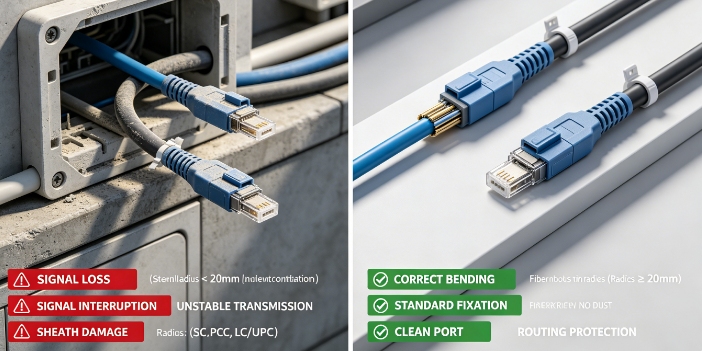
Signal Loss and Poor Transmission Quality
One of the most immediate consequences of improper installation of fiber optic drop cable is signal degradation.
- Excessive bending during installation: If the cable is bent beyond its minimum bending radius, it can cause micro-cracks in the fiber core, leading to significant signal attenuation and reduced transmission efficiency.
- Improper connector alignment: Poor alignment between connectors increases insertion loss, resulting in weak or unstable signals that affect internet speed and quality.
- Contaminated connection points: Dust, oil, or moisture on fiber ends during installation can block light transmission, causing intermittent connection issues or complete signal failure.
- Loose cable tension: If the fiber optic drop cable is not properly secured, movement or vibration may gradually disrupt signal stability over time.
These issues directly affect network performance, often resulting in slow speeds or frequent disconnections.
Physical Damage and Reduced Cable Lifespan
Incorrect installation practices can also cause long-term physical damage to the fiber optic drop cable itself.
- Over-tightening during fastening: Using excessive force when securing the cable can crush or deform the protective outer jacket, exposing internal fibers to damage.
- Improper routing paths: Installing cables along sharp edges or rough surfaces increases the risk of abrasion, which may eventually break the fiber core.
- Exposure to environmental stress: If the cable is not properly protected outdoors, UV rays, rain, or temperature fluctuations can accelerate material degradation.
- Lack of strain relief design: Without proper strain relief, pulling force at connection points may gradually weaken the structure of the cable.
Such physical damage reduces the operational lifespan of the fiber system and increases maintenance costs.
Network Instability and Frequent Service Interruptions
A poorly installed fiber optic drop cable often leads to unstable network performance, which can be highly disruptive for users.
- Intermittent connectivity issues: Loose connections or micro-bending can cause signals to drop randomly, resulting in unstable internet access.
- High bit error rate (BER): Poor installation increases data transmission errors, affecting video streaming, online gaming, and business applications.
- Fluctuating bandwidth performance: Users may experience inconsistent speeds due to unstable optical signal transmission along the cable path.
- Increased downtime for troubleshooting: Technicians may need frequent maintenance visits to identify and fix installation-related issues.
These problems are especially critical for commercial networks that require continuous uptime.
Increased Maintenance Costs and Operational Risks
Improper installation of fiber optic drop cable not only affects performance but also increases long-term operational expenses.
- Frequent repair requirements: Poor installation leads to repeated troubleshooting and replacement of damaged sections, increasing labor costs.
- Higher equipment replacement rates: Connectors, splitters, and terminal equipment may wear out faster due to unstable signal conditions.
- Unplanned service disruptions: Network downtime can result in customer dissatisfaction and potential financial losses for service providers.
- Additional diagnostic efforts: Identifying hidden installation faults often requires specialized testing equipment and skilled technicians.
These hidden costs can significantly impact the overall efficiency of network operations.
Safety Hazards and Compliance Issues
Incorrect handling of fiber optic drop cable may also introduce safety risks and regulatory concerns.
- Sharp fiber shards during breakage: Damaged fiber strands can pose injury risks if not properly handled during installation or repair.
- Improper grounding in outdoor setups: Lack of proper grounding or insulation may increase vulnerability to lightning or electrical interference.
- Violation of installation standards: Failing to follow industry guidelines can result in non-compliance with telecom infrastructure regulations.
- Fire safety concerns in extreme cases: Poorly installed cables near heat sources may degrade faster, increasing potential hazards.
Ensuring proper installation standards is essential for both safety and regulatory compliance.
Conclusion
Incorrect installation of fiber optic drop cable can lead to a wide range of problems, including signal loss, physical damage, network instability, higher maintenance costs, and safety risks. These issues not only reduce performance but also shorten the lifespan of the entire fiber network infrastructure. By following proper installation techniques—such as maintaining correct bending radius, ensuring clean connections, and protecting cables from environmental stress—users and technicians can ensure stable, efficient, and long-lasting network performance.