Among various types of equipment, the automatic filling system plays a crucial role in industries such as food and beverage, cosmetics, pharmaceuticals, and chemicals. Many buyers are particularly concerned about the cost of high-quality equipment and what determines its price. In reality, the price of a high-end filling system is not fixed and can vary widely depending on specifications, configuration, and supplier capability. Leading automatic filling machine manufacturers usually offer different pricing levels based on performance, customization, and production requirements, making it important for buyers to understand the key cost factors before making a decision.
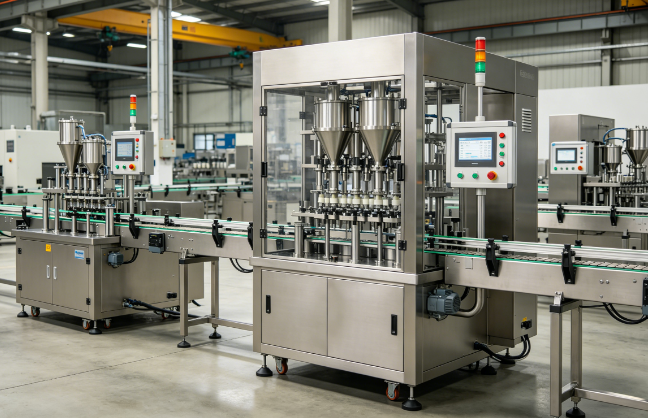
Key Factors That Influence the Cost of an Automatic Filling Machine
The price of a high-quality filling system is affected by multiple technical and commercial elements:
- Level of automation and control system
Machines with PLC control, touch-screen interfaces, and IoT connectivity are more expensive than semi-automatic models. Advanced automation increases efficiency but also raises production costs.
- Filling technology and application range
Piston filling, peristaltic pump filling, gravity filling, and vacuum filling systems differ in complexity. More advanced technologies designed for viscous or corrosive liquids generally increase overall pricing.
- Material quality and structural design
Stainless steel 304 or 316L is commonly used in high-end equipment for durability and hygiene. Corrosion-resistant materials and precision-engineered structures contribute to higher manufacturing costs.
Price Ranges Based on Machine Types and Configurations
When analyzing the market, pricing typically falls into several categories depending on functionality and production scale:
- Entry-level semi-automatic systems
These machines are appropriate for small businesses or startups. They offer basic filling functions with limited automation and relatively low cost, making them ideal for low-volume production.
- Mid-range fully automatic systems
The most commonly purchased category is offering a balance between performance and affordability. These systems include conveyor integration, automatic filling heads, and stable output for medium-scale production lines.
- High-end industrial production lines
Designed for large factories, these systems feature high-speed filling, multi-nozzle configurations, and full integration with capping and labeling machines. They are typically supplied by experienced automatic filling machine manufacturers and come with higher price tags due to advanced engineering and customization.
Industry Applications and Their Impact on Pricing
Different industries have different requirements, which directly affect equipment cost:
- Food and beverage industry
Requires hygienic design, food-grade materials, and anti-drip filling systems. These strict standards increase manufacturing complexity and cost.
- Cosmetics and personal care industry
Machines must handle creams, lotions, and gels with high precision. Custom nozzles and anti-foam systems are often required.
- Pharmaceutical and chemical industry
This sector demands sterile environments, corrosion-resistant materials, and extremely high accuracy, which significantly increases equipment value.
Customization, After-Sales Service, and Long-Term Value
Beyond basic equipment cost, additional services also influence the total investment:
- Customized production solutions
Many suppliers provide tailored designs based on bottle type, filling volume, and production speed. Customization improves efficiency but adds to the initial cost.
- Installation and technical training
Professional setup and operator training ensure smooth production. These services are often included or offered at additional cost by experienced suppliers.
- Maintenance and spare parts support
Long-term reliability depends on timely maintenance and access to original spare parts. Reliable automatic filling machine manufacturers usually provide strong after-sales support, which adds value over time.
How to Evaluate Cost vs Performance Effectively
Choosing the right equipment requires balancing price and functionality:
- Focus on production requirements rather than the lowest price
Selecting a machine solely based on cost may lead to inefficiency or future upgrade expenses.
- Evaluate supplier experience and technical capability
Established manufacturers often provide more stable performance, better engineering, and reliable quality assurance.
- Consider long-term operational efficiency
Energy consumption, maintenance cost, and downtime should all be considered when evaluating total investment value.
Conclusion
The cost of a high-quality filling system varies widely depending on automation level, material quality, application requirements, and customization needs. While entry-level machines are suitable for small-scale production, advanced systems designed by professional automatic filling machine manufacturers offer higher efficiency, precision, and long-term reliability. Instead of focusing solely on upfront price, businesses should evaluate overall performance, service support, and long-term operational benefits to ensure the best return on investment in modern production environments.