In modern fiber optic networks, the fiber faceplate is a critical yet often overlooked component. Many people see it as just a simple panel, but in reality, it plays a central role in network cabling. It not only organizes and secures fiber lines but also directly affects network stability, signal transmission efficiency, and maintenance convenience. In high-density network environments such as corporate offices, data centers, or laboratories, fiber lines without proper faceplate management can bend, cross, or suffer signal loss, leading to reduced performance and maintenance challenges. By using a fiber faceplate, fiber ports can be centralized and neatly managed, making network cabling safer, clearer, and easier to maintain, while also providing flexibility for future network expansion.
Unique Design of a Fiber Faceplate
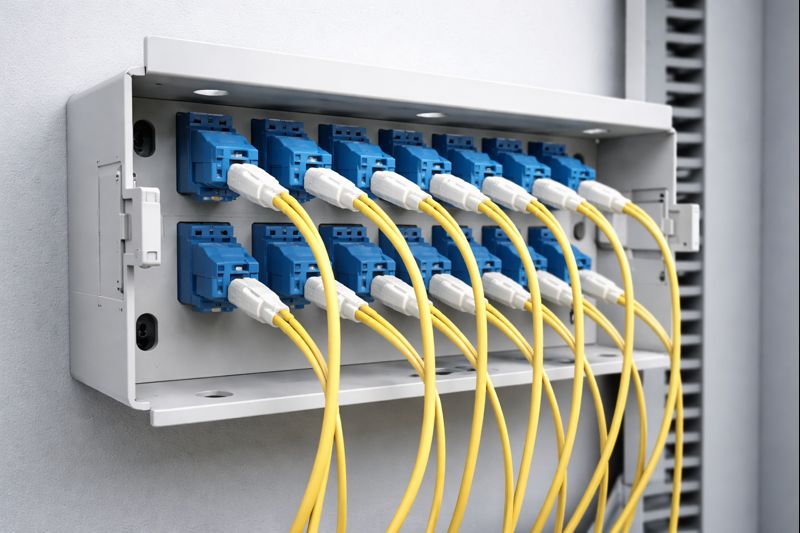
Unlike standard network panels, a fiber faceplate is specifically designed for fiber optics. Its features include:
- Precise Port Alignment: Through carefully designed adapter holes, fiber connectors are fixed in the optimal position. This prevents bending or stretching of fiber patch cords, reducing signal loss. Fiber optic signals are highly sensitive, and even minor bending can cause small losses. The precise alignment ensures that each fiber transmits along the best path, maintaining stable network performance.
- Modular Structure: Fiber faceplates often feature a modular design, allowing the number of ports to be increased or decreased as needed. This structure is convenient during network upgrades, as there is no need to replace the entire panel—simply add a module. Modular designs also help manage different types of fiber lines, such as separating backbone cables from terminal lines, enhancing system scalability and flexibility.
- Cable Management: Faceplates typically include cable trays or clips that prevent fiber cords from crossing or tangling. Neat cabling improves appearance and reduces the risk of damage caused by human error or environmental factors. With organized cable management, technicians can quickly identify and maintain lines, improving overall network efficiency.
How a Fiber Faceplate Maintains Signal Quality
Fiber signal transmission is highly dependent on physical conditions, and a fiber faceplate ensures signal quality in the following ways:
- Reducing Signal Loss
Fiber signals are prone to attenuation when bent or stretched. The fiber faceplate fixes connectors and maintains optimal routing paths, keeping fibers within their minimum bend radius and significantly reducing signal loss. This is especially important in high-density environments like data centers or enterprise server rooms, where multiple fiber lines without panel support may compromise signal quality.
- Preventing Physical Damage
Fiber cores are delicate, and even minor pulling or impact can cause breaks or cracks. The faceplate provides solid support, securing the fibers in place and protecting them from external forces or accidental handling. This not only protects the fibers but also reduces replacement and maintenance costs.
- Optimizing Maintenance Efficiency
Centralized ports on the faceplate allow technicians to quickly locate and adjust or replace lines without dismantling the entire cabling system. This centralized management significantly improves maintenance efficiency, reduces network downtime, and facilitates future fiber expansions or upgrades.
Applications of Fiber Faceplates in Different Environments
- Office Cabling: In office settings, fiber lines often coexist with other network equipment. A fiber faceplate keeps lines organized, prevents interference, and ensures a clear network layout. Neat cabling enhances appearance and reduces the risk of human errors during operation.
- Industrial or Laboratory Environments: In industrial or lab settings, equipment moves frequently, and conditions can be challenging. Faceplates provide high-strength protection, preventing fibers from damage caused by accidental impact or pulling. Secure installation ensures network stability even in demanding environments.
- Home Network Upgrades: For residential fiber users, a fiber faceplate can centralize multiple fiber lines, keeping the home network organized and tidy. It improves visual aesthetics, reduces the risk of line damage, and makes daily maintenance or network upgrades more convenient.
Key Factors When Choosing a Fiber Faceplate
- Port Type and Quantity: Choose a panel compatible with the fiber connector types in use (e.g., LC, SC, ST), ensuring the number of ports meets current needs and allows for future expansion. Incorrect choices may result in incompatible connections or unstable links.
- Installation Environment: Panels are available in wall-mounted, rack-mounted, or desktop configurations. The choice depends on the environment; offices or homes typically use wall-mounted panels to save space, while data centers or server rooms often use rack-mounted panels for centralized management of large numbers of fiber lines.
- Material and Heat Dissipation: High-quality faceplates are usually made of metal or high-strength plastic. Providing durability and effective heat dissipation to prevent environmental temperatures from affecting fiber performance. Proper material selection extends panel life and reduces the risk of fiber damage.
- Future Expandability: Modular designs allow for future network upgrades or additional fiber lines without replacing the entire panel. Selecting an expandable faceplate saves long-term costs and enhances network flexibility and adaptability.
Conclusion
The fiber faceplate is not just a “connection manager” for fiber optics; it is a critical component that ensures network stability and performance. Its design considers the physical security of fiber lines, signal quality, maintenance convenience, and long-term expandability. With precise design and proper installation, a fiber faceplate secures fibers, minimizes signal loss, protects lines, and improves overall network management efficiency. Whether in offices, data centers, industrial environments, or residential networks, choosing and using a fiber faceplate effectively extends fiber lifespan. Reduces maintenance costs and significantly enhances network reliability and stability. In other words, it is not merely a tool for cabling—it is a foundational element that ensures the long-term high performance of a fiber optic network.