
Recent Posts

What Services Should A Trusted PLC Splitter Manufacturer Provide?
In modern fiber optic communication systems, PLC splitters play a critical role in distributing optical...
Why Choose Flat Ribbon Fiber Cable Over Traditional Fiber Cables?
In today’s high-speed digital world, fiber optic networks are the backbone of data transmission. As data...
How Does Bottling Line Equipment Work?
Bottling line equipment plays a crucial role in the production process, automating the filling, capping,...
What Machines Are Included in a Spice Filling Line?
In the spice processing industry, a complete spice filling line enables automated packaging, improves...
How Does a Linear Motor Actuator Differ from a Traditional Linear Actuator?
In industrial automation and precision manufacturing, linear actuators play a key role in system efficiency,...
How Does a Fiber Faceplate Work?
In modern fiber optic networks, the fiber faceplate is a critical yet often overlooked component. Many...
How Does a Filling Machine Manufacturer Support Global Shipping?
In today’s globalized market, the demand for global shipping support from filling machine manufacturers...
Can a Sauce Bottling Machine Handle Different Types of Sauces?
In the food processing industry, sauce production and packaging play a crucial role in ensuring product...
How Does Servo Technology Improve Bottle Filling and Capping Machines?
With the continuous advancement of industrial automation and smart manufacturing. Servo technology has...
What Are the Benefits of an Injection Moulding Robot in Injection Moulding?
As automation becomes increasingly important in modern manufacturing, injection moulding robots are playing...

Category

What Are the Benefits of Using a Liquid Filling and Capping Machine?

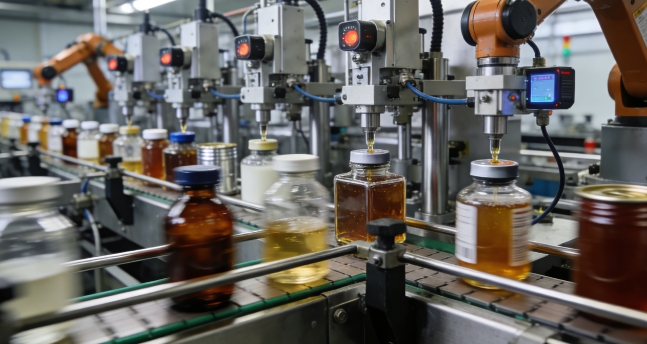
Liquid filling and capping machines have become essential equipment in many industries, including beverage, pharmaceuticals, cosmetics, and chemicals. These machines provide an efficient and reliable solution for filling containers with liquids and sealing them with caps, ensuring both quality and consistency in production. The automation of this process helps businesses achieve higher productivity, reduce labor costs, and improve the overall quality of their products. In this article, we will explore the benefits of using a liquid filling and capping machine and why it is a valuable investment for any business.

liquid filling and capping machine

1. Increased Production Efficiency

One of the primary advantages of using a liquid filling and capping machine is the significant increase in production efficiency. These machines can fill and cap large quantities of containers in a short period of time, which is far more efficient than manual processes. For businesses that require high-volume production, such as beverage manufacturers or pharmaceutical companies, this efficiency is crucial to meet demand and maximize output.

  • Automated systems can operate around the clock, thereby increasing production capacity.
  • Machines are designed to operate at high speeds, reducing production time per unit.
  • The automation eliminates the need for manual labor, freeing up workers for other tasks.

2. Consistency and Accuracy in Filling and Sealing

A key challenge in any liquid packaging process is ensuring the consistency and accuracy of filling and capping. Even small discrepancies in fill levels or cap sealing can lead to product quality issues, customer dissatisfaction, and waste. Liquid filling and capping machines are designed to deliver precise, uniform fills and secure cap placement every time.

  • These machines are equipped with sensors and controls to monitor and adjust the filling process.
  • They ensure that each container receives the correct amount of liquid, preventing overfilling or underfilling.
  • Automatic capping ensures that caps are securely sealed, preventing leakage or contamination.

3. Reduced Labor Costs

Using a liquid filling and capping machine significantly reduces the need for manual labor. In traditional packaging methods, workers are required to fill each container by hand and apply caps, which can be time-consuming and physically demanding. With an automated liquid filling and capping machine, businesses can reduce the number of workers needed on the production line, thus lowering labor costs.

  • Fewer workers are required for the same amount of work, reducing overhead costs.
  • The automation process minimizes human error, which can lead to costly mistakes.
  • Machines operate continuously, ensuring a smooth, uninterrupted production process.

4. Flexibility in Packaging Options

Liquid filling and capping machines are highly versatile and can handle various container types, liquid viscosities, and cap styles. This flexibility makes them ideal for businesses that produce a wide range of products or frequently change their product offerings.

  • Machines can accommodate different bottle shapes and sizes, from small vials to large containers.
  • They can handle a variety of liquid types, including thick, thin, carbonated, and non-carbonated liquids.
  • Some machines are designed to work with a range of cap types, such as screw caps, snap-on caps, or twist-off caps.

Conclusion

In conclusion, the use of a liquid filling and capping machine offers numerous benefits to businesses in various industries. From increased production efficiency to enhanced product quality and reduced labor costs, these machines help streamline the production process while ensuring consistency and reliability. Whether you’re in the beverage, pharmaceutical, or cosmetic industry, investing in a liquid filling and capping machine can significantly improve your operations and contribute to your long-term success.

Share This Post

©goodnessshare . All Rights Reserved