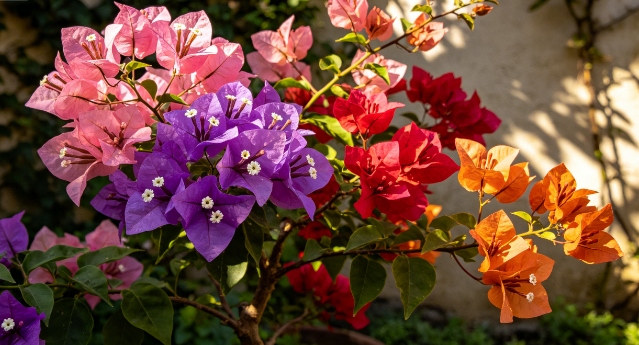
The colorful bougainvillea is a striking ornamental plant known for its vibrant display of pink, purple, red, orange, and white hues, often appearing together on a single plant. What many people think are flowers are actually colorful bracts that surround small, less noticeable true flowers. A fun fact about multicolor bougainvillea is that its color variations are not only determined by genetics but are also strongly influenced by environmental conditions, plant stress, and cultivation methods. This makes it a highly dynamic and visually impressive plant in gardening and landscape design.
The Surprising Science Behind Its Color Changes
One of the most interesting facts about multicolor bougainvillea is how its colors shift depending on environmental conditions rather than fixed floral pigmentation.
- Bracts instead of real petals create the color effect
The vivid pink, purple, or red structures that people admire are actually bracts, rather than petals. These modified leaves change appearance based on light exposure and plant condition, creating the illusion of multiple flower colors on a single plant.
- Sunlight intensity directly influences color brightness
Plants exposed to stronger sunlight tend to produce more vivid and saturated bract colors. In contrast, those grown in shaded areas may appear lighter or less intense, even within the same variety.
- Stress conditions can enhance color variation
Mild water stress or nutrient limitation can trigger stronger pigment development, which is why slightly “challenged” plants sometimes show more dramatic multicolor displays.
- Seasonal shifts naturally alter visual appearance
As temperatures and daylight hours change, the plant adjusts its growth behavior, often resulting in different color intensities throughout the year.
Why One Plant Can Display Multiple Colors
Another fascinating aspect of multicolor bougainvillea is its ability to produce different colors on the same plant simultaneously.
- Grafted varieties create mixed color displays
Many multicolored bougainvillea plants are produced through grafting, where branches from different color varieties are combined into one plant. This results in a single plant displaying multiple colors at once.
- Natural mutations may lead to color variations at the shoot level
In some cases, spontaneous genetic mutations cause individual branches to produce different colored bracts, adding to the plant’s unpredictability.
- Environmental variation within the same plant structure
Branches exposed to different light or temperature conditions may develop slightly different shades, even on the same plant.
- Pruning influences color distribution
Strategic trimming encourages new growth, and each new shoot may develop its own distinct color characteristics depending on its position and exposure.
Growth Habits That Make It Unique in Landscaping
In addition to their rich and diverse colors, multi-colored bougainvilleas are also renowned for their vigorous growth and strong adaptability.
Fast-growing climbing structure
It has fast growth and can quickly cover walls, fences, and pergolas, making it a great option for vertical landscaping applications.
Thorny stems provide natural protection
The plant’s thorns help it climb and also discourage animals from disturbing it, adding a practical defensive function.
Highly drought-tolerant nature
Once established, it requires relatively little water, making it suitable for warm and dry climates.
Long blooming cycles in warm environments
In tropical and subtropical regions, it can bloom repeatedly throughout the year with proper sunlight exposure.
Care Factors That Influence Color Performance
The appearance of multicolored bougainvillea is strongly affected by how it is cared for, especially in home gardens.
- Full sunlight is essential for vibrant colors
At least 5–6 hours of direct sunlight daily helps maintain strong pigmentation in the bracts.
- Controlled watering enhances blooming quality
Slightly dry conditions often encourage better flowering compared to overly moist soil.
- Pruning promotes new colorful growth
Regular pruning stimulates the growth of new shoots, which are more likely to produce vibrant and striking bracts.
- Balanced fertilization supports healthy but controlled growth
Excess nitrogen may lead to lush leaves but fewer colorful bracts, while balanced nutrients encourage flowering.
Fun Facts That Surprise Most Gardeners
Multicolor bougainvillea has several lesser-known characteristics that make it especially interesting to plant lovers.
- In the traditional sense, it is not actually a flowering plant
What people see as flowers are modified leaves, while the real flowers are small and white inside the bracts.
- It thrives on slight neglect rather than constant care
Overwatering or over-fertilizing can reduce its color intensity and blooming performance.
- Color combinations can change over time on the same plant
As branches age or are replaced by new growth, the overall color pattern of the plant may shift gradually.
- It is widely used in artistic landscape design
Designers often use it to create dramatic visual contrasts in gardens, walls, and public spaces due to its unpredictable color behavior.
Conclusion
A fascinating fact about multicolor bougainvillea is that its stunning variety of colors is not fixed but shaped by genetics, environment, and care conditions. From the vibrant hues displayed by its grafted branches to the way sunlight influences the intensity of its pigments, the appearance of this plant is in a constant state of flux, making it one of the most dynamically beautiful ornamental plants in the realm of horticulture. Its fast growth, drought tolerance, and unique color behavior make it both a practical and visually striking choice for landscapes. Understanding how its colors develop helps gardeners fully appreciate its beauty and create more vibrant and expressive garden designs.