
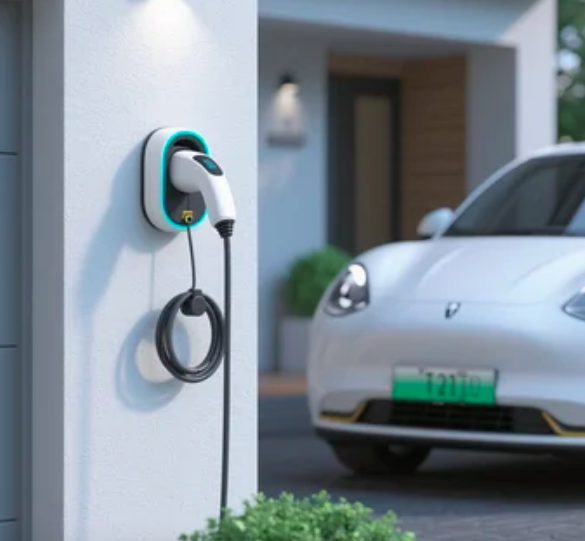
Choosing the right home electric car charger solution is essential for EV owners who want safe, efficient, and convenient charging at home. A home electric car charger solution not only affects how quickly your electric vehicle charges but also impacts energy consumption, cost efficiency, and long-term reliability. Understanding the types of chargers available, installation requirements, and additional features will help homeowners make informed decisions about the best solution for their needs.
What Is a Home Electric Car Charger Solution?
A home electric car charger solution refers to a dedicated charging system installed at a residential location to recharge electric vehicles. Unlike public charging stations, which may charge multiple vehicles simultaneously, home chargers are designed for personal use, providing convenience and control over charging schedules. These solutions can range from simple Level 1 chargers, which plug into standard household outlets, to more advanced Level 2 units that offer faster charging and additional features.
Investing in a home electric car charger solution offers multiple advantages. First, it ensures that your EV is fully charged overnight or whenever convenient, eliminating the need to rely on public stations. Second, home chargers can reduce electricity costs by utilizing off-peak rates. Finally, integrating a home charger with smart home systems or renewable energy sources, such as solar panels, enhances energy efficiency and sustainability.
Level 1 chargers are the simplest home electric car charger solution. They typically plug into a standard 120V household outlet and provide slow charging rates, often adding about 3–5 miles of range per hour. While Level 1 chargers are easy to install and do not require major electrical upgrades, they are best suited for users with low daily driving distances or plug-in hybrid vehicles with smaller batteries.
For faster and more efficient home charging, a Level 2 home electric car charger solution is ideal. These chargers operate at 240V and can add 15–30 miles of range per hour, depending on the vehicle and charger capacity. Installing a Level 2 charger usually requires a dedicated electrical circuit and professional installation, but the increased charging speed and convenience often justify the investment.
Modern home electric car charger solutions may include smart features such as remote monitoring, scheduled charging, and energy management. Integration with home energy storage systems or solar panels allows homeowners to optimize electricity usage, reduce costs, and support sustainable energy practices. These advanced solutions provide not only faster charging but also intelligent energy management for the household.
Proper installation of a home electric car charger solution requires evaluating the home’s electrical infrastructure. Level 2 chargers need a dedicated 240V circuit with appropriate breakers and wiring. A licensed electrician should assess capacity, grounding, and safety requirements to ensure reliable operation.
Choosing the right location for a home electric car charger solution is crucial for safety and convenience. Chargers should be mounted on a wall or pedestal in a dry, ventilated area, with easy access to the vehicle’s charging port. Proper cable management and clearance around the charger prevent tripping hazards and ensure long-term durability of the equipment.
A home electric car charger solution must be compatible with your EV’s charging standards. Most modern EVs use the J1772 connector in North America, but it’s important to confirm compatibility with the charger. Some vehicles support faster charging protocols, which may influence the choice of home charging equipment.
Integrating a home electric car charger solution with solar panels or home batteries can maximize efficiency and reduce costs. Energy stored during off-peak hours or generated by renewable sources can be used to charge the vehicle, lowering reliance on the grid and supporting environmental sustainability. This approach makes home EV charging both cost-effective and eco-friendly.
Advanced home electric car charger solutions offer smart features that allow users to schedule charging times, monitor energy consumption, and receive alerts via mobile apps. Scheduled charging can take advantage of lower electricity rates, and smart energy management ensures that the home’s electrical load remains balanced.
Selecting the best home electric car charger solution depends on factors such as charging speed, electrical infrastructure, budget, and additional features. Level 1 chargers provide simple, low-cost solutions, while Level 2 chargers offer faster charging and smart capabilities. Integration with renewable energy and intelligent scheduling further enhances efficiency and sustainability. By carefully evaluating these aspects, homeowners can choose a home electric car charger solution that meets their needs, supports EV adoption, and provides long-term convenience and cost savings.