
Home » SMT Manufacturing: The Backbone of Electronics Innovation
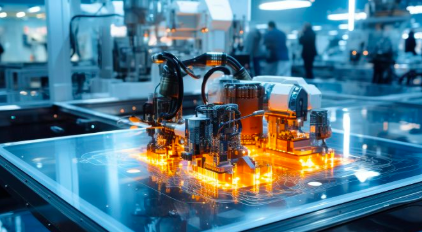
In a world driven by technology, SMT manufacturing (Surface Mount Technology) plays a pivotal role in the production of modern electronics. This advanced assembly process has revolutionized the way electronic components are integrated into devices, enabling compact designs, faster production, and high reliability. SMT has become indispensable across industries, from consumer electronics to telecommunications, powering the innovations that shape our digital lives.
SMT manufacturing involves the direct placement of electronic components onto the surface of printed circuit boards (PCBs). Unlike the traditional through-hole technique, SMT eliminates the need for drilling holes into PCBs, relying instead on automated machinery for precision and efficiency. This approach supports high-density layouts and scalable production, making it ideal for modern electronics.
The process starts with applying solder paste to the PCB using a stencil. This paste contains solder particles suspended in flux, preparing the board for component placement.
Automated pick-and-place machines accurately position components onto the PCB, ensuring high-speed assembly with minimal error.
The PCB is heated in a reflow oven, where the solder paste melts and forms strong connections between the components and the board.
Advanced tools such as Automated Optical Inspection (AOI) systems and X-ray machines verify assembly accuracy and detect any potential defects.
The assembled PCB is integrated into the final device, ready for deployment in its respective industry.
SMT enables high-density layouts, allowing manufacturers to produce smaller and lighter devices without compromising performance.
Automation in SMT manufacturing accelerates assembly processes, reducing production times and increasing scalability.
By minimizing material waste and manual labor, SMT offers a cost-effective solution for electronics assembly.
Surface-mounted components are less prone to physical stress and vibration, ensuring durability across various applications.
SMT accommodates diverse components and layouts, fostering innovation in electronic engineering.
From smartphones to wearable devices, SMT drives the compact designs and advanced functionalities of modern gadgets.
SMT supports critical systems like engine controls, advanced driver-assistance systems (ADAS), and infotainment modules in modern vehicles.
Precision instruments such as diagnostic tools and portable monitors rely on SMT for their accuracy and reliability.
Networking equipment, 5G modules, and IoT devices benefit from SMT’s scalable and efficient processes.
SMT powers IoT-enabled machinery and smart factory equipment, driving automation and connectivity in manufacturing.
The demand for smaller and more efficient devices drives SMT advancements to handle micro-components and densely packed designs.
Wearable and foldable technology is prompting SMT to adapt to flexible PCB structures.
Eco-friendly manufacturing, including lead-free soldering and energy-efficient processes, is becoming a priority for SMT producers.
AI-powered inspections and IoT-enabled monitoring systems are transforming SMT production lines for greater precision and efficiency.
Innovative solder alloys and heat-resistant substrates are expanding SMT’s capabilities for challenging environments.
As industries continue to embrace automation, connectivity, and sustainable practices, SMT manufacturing will remain a cornerstone of progress. Its role in powering emerging technologies like artificial intelligence (AI), augmented reality (AR), and renewable energy systems ensures its relevance in the future of electronics. With ongoing advancements in materials, processes, and equipment, SMT is set to drive innovation and unlock new possibilities.
SMT manufacturing is the backbone of the electronics industry, enabling compact, efficient, and high-performance designs that power modern devices. Its adaptability and precision have transformed industries and created opportunities for technological growth. As SMT evolves, it will continue to lead the way in shaping the future of electronics production.