
Recent Posts

Why Choose Flat Ribbon Fiber Cable Over Traditional Fiber Cables?
In today’s high-speed digital world, fiber optic networks are the backbone of data transmission. As data...
How Does Bottling Line Equipment Work?
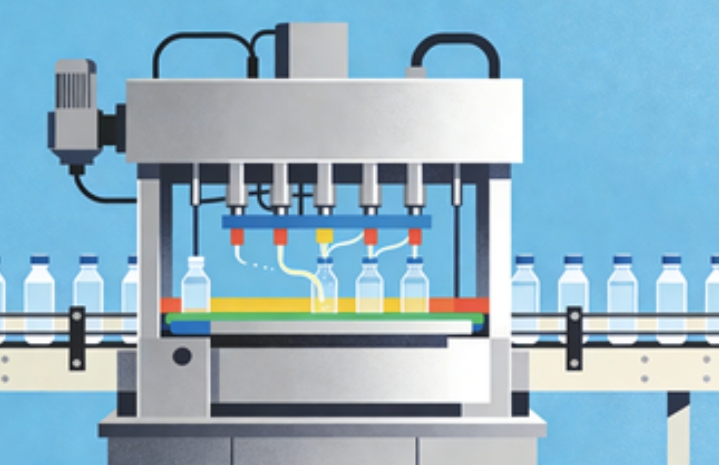
Bottling line equipment plays a crucial role in the production process, automating the filling, capping,...
What Machines Are Included in a Spice Filling Line?
In the spice processing industry, a complete spice filling line enables automated packaging, improves...
How Does a Linear Motor Actuator Differ from a Traditional Linear Actuator?
In industrial automation and precision manufacturing, linear actuators play a key role in system efficiency,...
How Does a Fiber Faceplate Work?
In modern fiber optic networks, the fiber faceplate is a critical yet often overlooked component. Many...
How Does a Filling Machine Manufacturer Support Global Shipping?
In today’s globalized market, the demand for global shipping support from filling machine manufacturers...
Can a Sauce Bottling Machine Handle Different Types of Sauces?
In the food processing industry, sauce production and packaging play a crucial role in ensuring product...
What Are the Benefits of an Injection Moulding Robot in Injection Moulding?
As automation becomes increasingly important in modern manufacturing, injection moulding robots are playing...
What is the Operating Principle Behind Armoured Fibre Optic Cables?
Armoured fibre optic cables are specialised types of cables designed to provide superior protection to...
How Does a Resistive Touch Screen Compare to a Capacitive Touch Screen?
Touchscreens have become the primary means of interaction with devices in today’s digital world....

Category

bottle filling and capping machine3

How Does Servo Technology Improve Bottle Filling and Capping Machines?

With the continuous advancement of industrial automation and smart manufacturing. Servo technology has become one of the most important upgrades in modern packaging equipment. Its application in the bottle filling and capping machine has fundamentally changed traditional mechanical and pneumatic control methods. Compared with conventional systems, servo-driven solutions provide higher precision, better stability, greater flexibility, and a higher level of intelligent control. Making them ideal for today’s high-efficiency production lines.
1. Higher Accuracy in Filling and Capping Operations

  • Precise filling control: Servo systems allow precise control of filling stroke, speed, and timing. Ensuring that each bottle receives an accurate and consistent filling volume. This level of accuracy effectively reduces overfilling, dripping, and material waste, helping manufacturers maintain consistent product quality.
  • Stable and adjustable capping torque: During the capping process, servo motors accurately control rotation angle and torque output. Preventing caps from being over-tightened or under-tightened. This ensures reliable sealing performance and protects both bottles and caps from damage.
  • Consistent quality across production batches: With servo-driven control, a bottle filling and capping machine can maintain stable filling and capping results during long-term continuous operation. This is especially important for food, beverage, pharmaceutical, and cosmetic applications.

bottle filling and capping machine3

2. Improved Production Efficiency and High-Speed Stability

  • Fast response and smooth motion control: Servo motors respond quickly and provide smooth acceleration and deceleration. Allowing the machine to operate at high speeds while minimizing vibration and mechanical shock.
  • Highly synchronized filling and capping processes: Servo technology enables precise synchronization between filling and capping operations, reducing idle time between processes and improving overall line efficiency.
  • Higher output with reduced downtime: Compared with traditional drive systems, a servo-driven bottle filling and capping machine can achieve higher production capacity while maintaining stable performance, resulting in fewer breakdowns and less unplanned downtime.

3. Greater Flexibility for Multiple Bottle Types and Production Requirements

  • Quick and accurate parameter adjustment: Operators can easily adjust filling volume, bottle size, and capping parameters through the control interface, eliminating the need for complex mechanical adjustments.
  • Easy adaptation to different bottles and caps: Servo systems can handle a wide range of bottle heights, diameters, and cap types, ensuring stable operation even when production requirements change.
  • Support for flexible and customized production: Thanks to its high adaptability, a servo-based bottle filling and capping machine is well-suited for multi-product, small-batch, and customized production, helping manufacturers respond quickly to market demands.

4. Lower Maintenance Cost and Advanced Intelligent Control

  • Reduced mechanical wear and maintenance needs: Servo-driven systems reduce reliance on complex mechanical transmission parts such as cams, gears, and belts. This simplified structure minimizes mechanical wear, lowers the frequency of component replacement, and extends the overall service life of the bottle filling and capping machine, resulting in more stable long-term operation.
  • Energy-efficient operation: Servo motors supply power according to actual load requirements rather than running continuously at full capacity. This optimized power usage improves energy efficiency, reduces unnecessary energy consumption, and helps manufacturers control long-term operating costs.
  • Smart monitoring and data integration: When integrated with PLC and automation control systems, a bottle filling and capping machine can achieve real-time monitoring of operating status, automatic fault detection, and production data recording. These intelligent functions support better maintenance planning, quality control, and the transition toward digital and smart factory management.

Conclusion

In conclusion, servo technology significantly improves the performance of the bottle filling and capping machine by enhancing accuracy, production efficiency, and operational flexibility. Precise control of filling volume and capping torque helps ensure consistent product quality while reducing waste and sealing issues. At the same time, smooth motion control allows stable high-speed operation, supporting higher output with less downtime. With lower maintenance requirements and better energy efficiency, servo-driven bottle filling and capping machines have become a practical and reliable solution for modern automated production lines.

Share This Post

©goodnessshare . All Rights Reserved