
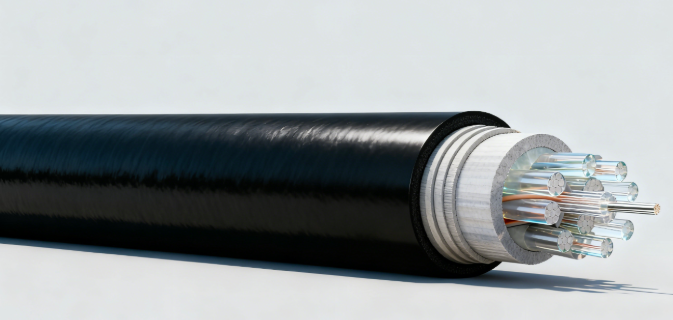
All-dielectric self-supporting cable (ADSS) is a specialized type of optical fiber cable designed for aerial installation without the need for metallic components. These cables are used in applications that require high performance and reliability, particularly in telecommunications and power utilities. The all-dielectric construction makes these cables non-conductive, offering electrical isolation, while the self-supporting feature eliminates the need for additional support wires.
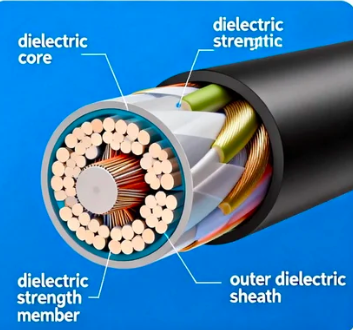
The main advantage of all-dielectric self-supporting cables is their non-conductive structure. Made entirely of non-metallic materials, ADSS cables are safe to install near high-voltage power lines. They avoid the risk of electrical interference and are ideal for aerial fiber deployments where safety and reliability are critical.
Another key feature of all-dielectric self-supporting cables is their ability to be installed without additional supporting cables. This is achieved through the use of high-strength materials like aramid yarn or fiberglass, which provide the necessary tensile strength to suspend the cable between poles or towers.
All-dielectric self-supporting cables are commonly used in long-distance and backbone telecommunications networks. Their flexibility and high fiber capacity make them ideal for rural areas or metropolitan systems where overhead installation is required. ADSS cables provide a reliable solution for transmitting data, voice, and video signals across long spans without the need for complex infrastructure.
In addition to telecommunications, all-dielectric self-supporting cables are widely used in power utility networks. These cables are installed along power transmission lines for communication purposes, including monitoring and control systems. Their ability to coexist safely with high-voltage lines makes them ideal for ensuring seamless communication between substations, power plants, and control centers.
The all-dielectric nature of ADSS cables ensures that they do not conduct electricity, offering significant safety advantages over traditional metal cables. This feature makes them highly suitable for use in areas with high electrical risks, such as near power lines, without the danger of electrical shock or short circuits.
Because all-dielectric self-supporting cables do not require additional support wires, the installation process is quicker and more cost-effective. This simplifies the infrastructure requirements and reduces material costs, making it an attractive option for network operators looking to deploy fiber optic cables in hard-to-reach or expensive areas.
All-dielectric self-supporting cables provide a practical, safe, and cost-effective solution for both telecommunications and utility applications. Their non-conductive design, ease of installation, and long-term reliability make them an ideal choice for modern network infrastructure. As the demand for high-speed data and reliable communication systems continues to grow, all-dielectric self-supporting cables will play a crucial role in ensuring robust, future-proof connectivity solutions.