
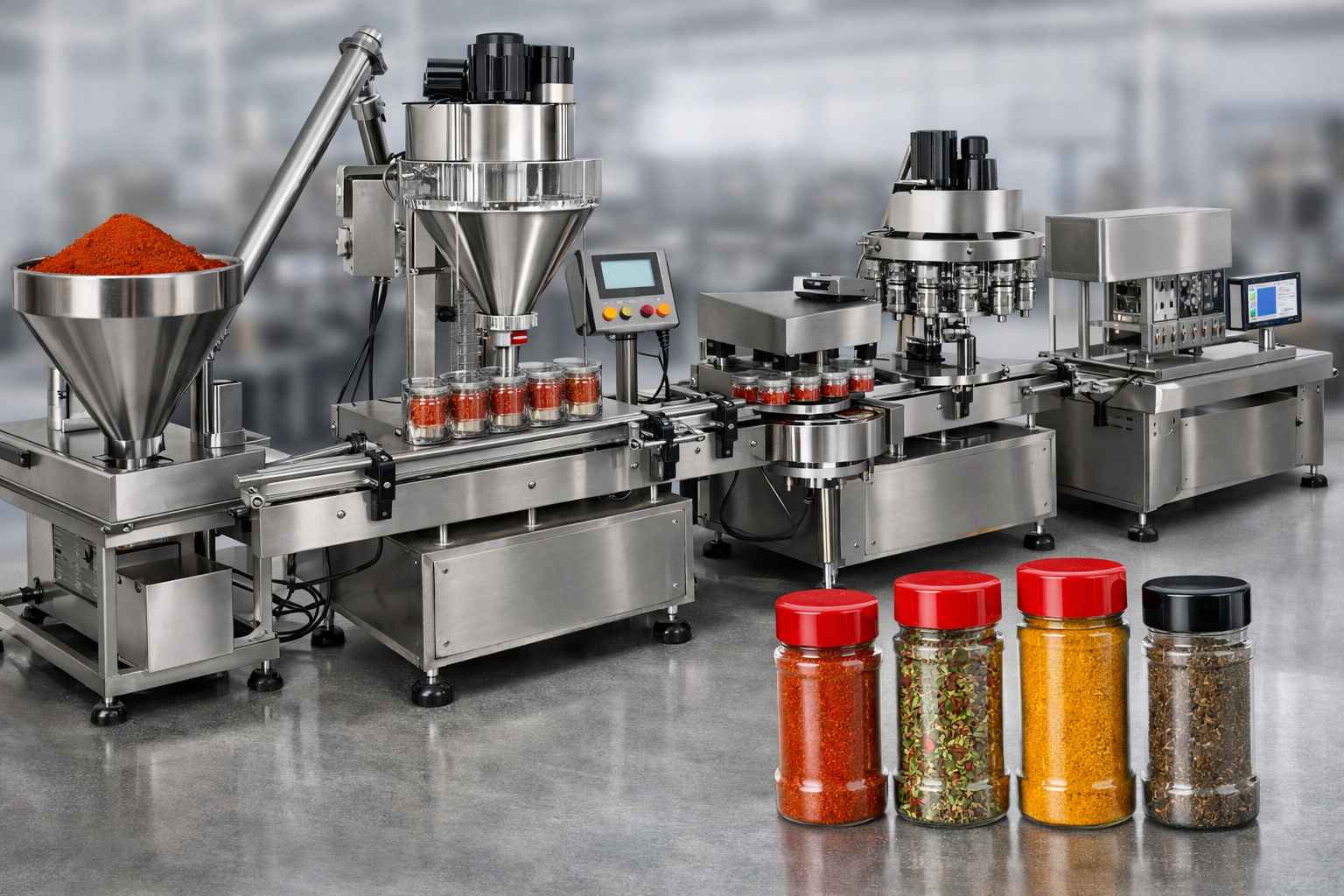
In the spice processing industry, a complete spice filling line enables automated packaging, improves efficiency, and ensures precise filling. Whether for chili powder, black pepper, or blended seasoning, it provides stable, hygienic, and high-speed production. Compared to manual packaging, it reduces human error, dust, and production inconsistencies. So, what machines make up a standard spice filling line? Here’s a closer look.
A complete spice filling line typically starts with a feeding system. This system transfers powdered or granular spices steadily to the filling machines, ensuring uninterrupted production. A stable feeding system not only improves efficiency but also maintains filling accuracy, avoiding weight inconsistencies caused by uneven material flow.
Common feeding equipment includes:
A well-designed feeding system prevents blockages and interruptions, improving the overall efficiency and stability of the spice filling line.
The filling machine is the core equipment in a spice filling line, responsible for accurately dispensing spices into containers according to preset weights. Most powder spice lines use auger filling machines, which offer stable and precise measurement, especially for powders with uneven flow characteristics.
A typical spice filling machine has the following features:
The performance of the filling machine directly affects production efficiency and product consistency, making it a key consideration when selecting equipment.
The conveyor system connects all parts of the spice filling line, moving empty bottles into the filling area and transporting filled products to subsequent processes. A stable conveyor flow ensures continuous operation, preventing accumulation or waiting times that could slow production.
Conveyors are usually made of stainless steel or food-grade modular belts, which are durable and easy to clean. In automated lines, bottle handling equipment can be added to automatically orient and align bottles, reducing manual labor and increasing efficiency.
A properly designed conveyor system keeps the entire spice filling line running smoothly and lowers equipment downtime.
After filling, products require sealing, which is an essential part of the spice filling line. Proper sealing prevents moisture and leakage, protecting the spice during storage and transportation.
Common sealing equipment includes:
Depending on packaging requirements, the spice filling line can choose the appropriate sealing method to meet different market demands.
To complete the packaging process, most spice filling lines are equipped with labeling and coding machines. Labeling machines automatically apply labels, ensuring consistent appearance and improving packaging efficiency. Automatic labeling reduces misalignment or wrinkling, enhancing product presentation.
Coding machines print production dates, batch numbers, or barcodes directly on containers. This is essential for product traceability and quality management. Modern coding equipment can operate at high speed with clear, durable printing.
These systems help manufacturers standardize products and ensure the spice filling line meets market and export requirements.
For highly automated factories, the spice filling line can include auxiliary equipment such as checkweighers and automatic cartoning machines. These devices further increase production efficiency and reduce labor costs, ensuring a more stable production process.
Checkweighers detect the weight of every bottle and automatically remove underfilled or overfilled products, maintaining consistent product quality. Automatic cartoning machines pack finished products into boxes and seal them, suitable for large-scale production.
These auxiliary devices allow the spice filling line to reach higher automation levels, ideal for medium and large spice manufacturers.
In summary, a complete spice filling line usually consists of a feeding system, filling machine, conveyor system, sealing equipment, and labeling/coding systems. Configuration can be adjusted based on production scale and automation requirements. A well-designed spice filling line not only increases production capacity but also reduces labor costs and ensures consistent product quality, making it a critical investment for spice manufacturers aiming to achieve automated, scalable production.