
Recent Posts

What is the Operating Principle Behind Armoured Fibre Optic Cables?
Armoured fibre optic cables are specialised types of cables designed to provide superior protection to...
How Does a Resistive Touch Screen Compare to a Capacitive Touch Screen?
Touchscreens have become the primary means of interaction with devices in today’s digital world....
What Are the Key Functions of a Swing Arm Robot?
In modern industry and automation, swing arm robots have become indispensable tools for enhancing production...
How to Choose the Right Fiber Pigtail for Your Application?
Choosing the right fiber pigtail can not only improve signal quality but also reduce future maintenance...
Why Businesses Are Investing in Commercial DC Fast Chargers
Unlike household AC chargers, commercial DC fast chargers are designed for high-intensity use. They integrate...
What Are the Common Problems with Traffic Signal Timers?
Traffic signal timers are designed to ensure reliability, but over time, environmental wear and tear,...
How to Choose the Right EV Charging Station Adapter for Your EV?
As electric vehicles (EVs) become increasingly popular worldwide, charging compatibility has become a...
How Does Double Sheathed Cable Help in Minimizing Signal Interference?
Signal interference is a major problem in electrical and communication systems. External noise, electromagnetic...
How to Use Fast Connectors in Conveyor Belt Systems?
In modern automated production lines, the conveyor belt system plays a crucial role in maintaining continuous...
Why a Google Advertising Agency is Essential for Your Business Growth
A Google advertising agency is a specialized firm that manages Google Ads campaigns for businesses. These...

Category

packaging conveyor systems

What Are Packaging Conveyor Systems?

Packaging conveyor systems are a vital part of modern manufacturing and logistics. They automate the movement of goods and materials during the packaging process, streamline production lines, reduce manual labor, and increase operational efficiency across various industries. Whether you’re in food packaging, pharmaceuticals, or e-commerce fulfillment, understanding these systems is key to optimizing your business operations.

How Packaging Conveyor Systems Work

Packaging conveyor systems are designed to transport products, raw materials, and packaging components efficiently along production lines. They minimize manual handling, increase speed, and improve accuracy throughout the packaging process.

A typical system includes several key components:

  • Conveyor belts or rollers– serve as the main channels for moving products along the production line, ensuring smooth and efficient transportation.
  • Motors and drives– provide power to move the conveyors smoothly.
  • Sensors– monitor product flow and detect jams or misalignments.
  • Automated controls– manage sorting, labeling, and other packaging decisions.

Packaging conveyor systems can be tailored to transport a wide range of products, whether fragile, bulky, or uniquely shaped, ensuring smooth and safe handling throughout the production line. By integrating these components, packaging conveyor systems ensure a continuous, efficient, and reliable workflow.
Types of Packaging Conveyor Systems

packaging conveyor systems

Different industries and production needs require different types of packaging conveyor systems. The most common types include:

1. Belt Conveyors:Belt conveyors utilize a seamless belt constructed from materials such as rubber, plastic, or metal to efficiently carry products from one stage of the production process to the next. They are highly adaptable, capable of handling a wide variety of product shapes, sizes, and weights with ease.

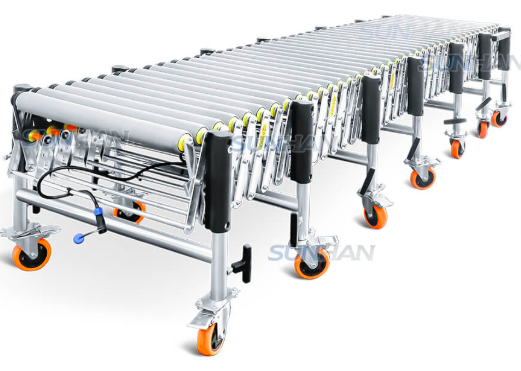
2. Roller Conveyors:Roller conveyor systems consist of multiple rotating rollers that guide and move items along the packaging line, making them ideal for heavier or larger goods. Powered roller conveyors further improve efficiency in moving products through various packaging stages.

3. Chain Conveyors:Chain conveyors are designed for heavier items, such as automotive parts or large packages. Known for durability and high load capacity, they are ideal for transporting large, heavy goods.

4. Inclined Conveyors:Inclined conveyor systems move items smoothly across multiple heights within a facility, connecting different stages of the production or packaging process. They are commonly used to transport goods between floors or sections of a warehouse.

5. Overhead Conveyors:Overhead conveyor systems transport products suspended from an elevated track, effectively freeing up floor space for other operations. They are particularly useful for moving bulky, oddly shaped, or high-volume items and are widely applied in industries such as apparel, automotive, and assembly lines.

Benefits of Packaging Conveyor Systems

Investing in packaging conveyor systems offers numerous advantages:

  • Increased Efficiency:Automation reduces manual handling and ensures a consistent production speed, boosting overall workflow efficiency.
  • Cost Savings:By automating repetitive tasks, conveyor systems reduce labor costs and free up resources for other operations.
  • Improved Consistency and Quality:Products move consistently along the production line, reducing errors such as misplacement or improper sealing and maintaining high-quality packaging standards.
  • Space Optimization:Overhead and vertical conveyor systems maximize floor space, freeing up areas for other operations and increasing production capacity.
  • Enhanced Safety:Conveyor systems minimize the need for manual handling and product transportation, significantly reducing the likelihood of workplace accidents and physical strain on workers.

Industries That Benefit from Packaging Conveyor Systems

Packaging conveyor systems are essential across multiple industries:

  • E-Commerce:Automates product handling, speeding up packaging and shipping processes to meet high-volume order demands efficiently.
  • Food and Beverage:Transports raw ingredients and finished products while maintaining hygiene and safety standards, improving production speed and quality.
  • Pharmaceuticals:Ensures precise, sterile handling of medical products and packaging, meeting strict regulatory standards and reducing human error.
  • Automotive Manufacturing:Moves large and heavy components efficiently along production lines, supporting accurate assembly and minimizing delays.

How to Choose the Right Packaging Conveyor System

Selecting the ideal packaging conveyor system depends on several key factors:

  • Product Type– Determine if you need to transport small, delicate items or large, heavy goods.
  • Production Volume– Ensure the system can handle your required throughput and speed.
  • Space Constraints– Verify the system fits your facility. Overhead systems can save floor space.
  • Maintenance Needs– Choose a system that is easy to maintain to ensure smooth long-term operation.

Conclusion

Packaging conveyor systems are essential for optimizing production lines, reducing labor costs, and improving overall efficiency. They are versatile, customizable, and suitable for a wide range of industries, including e-commerce, food production, pharmaceuticals, and automotive manufacturing.

Investing in the right conveyor system enhances productivity, ensures consistent quality, and supports safer, more efficient operations. Evaluating your specific production requirements will help you select a system that fits your speed, capacity, and space needs.

Share This Post

©goodnessshare . All Rights Reserved