
Recent Posts

What is the Operating Principle Behind Armoured Fibre Optic Cables?
Armoured fibre optic cables are specialised types of cables designed to provide superior protection to...
How Does a Resistive Touch Screen Compare to a Capacitive Touch Screen?
Touchscreens have become the primary means of interaction with devices in today’s digital world....
What Are the Key Functions of a Swing Arm Robot?
In modern industry and automation, swing arm robots have become indispensable tools for enhancing production...
How to Choose the Right Fiber Pigtail for Your Application?
Choosing the right fiber pigtail can not only improve signal quality but also reduce future maintenance...
What Are the Common Problems with Traffic Signal Timers?
Traffic signal timers are designed to ensure reliability, but over time, environmental wear and tear,...
How to Choose the Right EV Charging Station Adapter for Your EV?
As electric vehicles (EVs) become increasingly popular worldwide, charging compatibility has become a...
How Does Double Sheathed Cable Help in Minimizing Signal Interference?
Signal interference is a major problem in electrical and communication systems. External noise, electromagnetic...
How to Use Fast Connectors in Conveyor Belt Systems?
In modern automated production lines, the conveyor belt system plays a crucial role in maintaining continuous...
Why a Google Advertising Agency is Essential for Your Business Growth
A Google advertising agency is a specialized firm that manages Google Ads campaigns for businesses. These...
Pet Halloween Decorations: Keeping Your Furry Friends Safe
While spooky Halloween decorations may delight humans, they can also pose risks to pets. With careful...

Category

DC

Why Businesses Are Investing in Commercial DC Fast Chargers

Unlike household AC chargers, commercial DC fast chargers are designed for high-intensity use. They integrate intelligent power management, overheat protection, and network communication features to ensure reliable, safe, and scalable operation in harsh environments. These charging stations are now standard equipment in shopping malls, parking lots, logistics hubs, and highway rest areas.

Why Commercial DC Fast Chargers Are Gaining Popularity

The rise of commercial DC fast chargers can be traced to several key market shifts and practical benefits:

  • Speed and Efficiency: Time is critical in commercial operations. Fast chargers enable businesses to charge multiple vehicles in a short period, ensuring fleet continuity and customer satisfaction.
  • Scalability: Modular designs allow companies to start with a small setup and expand capacity as EV usage grows.
  • Smart Control: Many systems feature load balancing and real-time monitoring, helping operators manage power costs efficiently.
  • Energy Optimization: Integration with renewable energy sources or battery storage allows businesses to reduce peak demand charges.
  • Customer Attraction: Installing a commercial DC fast charger in retail or hospitality environments can increase foot traffic and brand visibility.

As the EV industry continues to evolve, these chargers represent not only a convenience but also a competitive advantage for forward-thinking companies.

Applications of Commercial DC Fast Chargers

The adaptability of commercial DC fast chargers makes them useful across different sectors. Their robust design and intelligent energy control suit a variety of commercial and public settings:

  • Fleet Management: Delivery, taxi, and logistics companies use fast chargers to keep vehicles ready for continuous operation.
  • Public Charging Networks: Operators deploy them in urban centers, rest stops, and highways to ensure wide accessibility for drivers.
  • Corporate Campuses: Businesses that provide employee charging benefit from higher productivity and sustainability recognition.
  • Commercial Real Estate: Property developers install fast chargers to enhance property value and attract environmentally conscious tenants.
  • Municipal Use: Local governments integrate charging stations into transportation systems and public infrastructure.

Each of these applications highlights how commercial DC fast chargers support mobility without disrupting normal operations.

Key Features That Define a Reliable Commercial DC Fast Charger

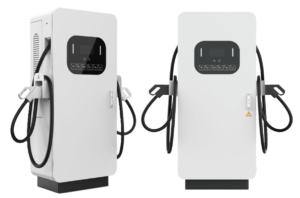
Modern charging systems are designed to meet diverse user demands while maintaining operational stability. High-quality commercial DC fast chargers typically share several essential features:
DC

  • High Power Output: Chargers range from 60kW to over 350kW, suitable for both passenger cars and heavy-duty EVs.
  • Multiple Connector Compatibility: Many units support CCS, CHAdeMO, or other standards to accommodate different vehicle models.
  • User-Friendly Interface: Touchscreen controls, contactless payment options, and mobile connectivity enhance user experience.
  • Durability: Outdoor-rated enclosures protect components against dust, water, and temperature fluctuations.
  • Network Integration: Smart connectivity enables remote diagnostics, software updates, and payment system management.

By combining robust engineering with digital control, commercial DC fast chargers offer dependable service across a wide range of operational environments.

The Role of Smart Charging in Business Efficiency

One of the most valuable aspects of a commercial DC fast charger is its integration with smart management platforms. These systems give operators real-time insights into charging activity, energy consumption, and station utilization.

Smart scheduling ensures that charging happens during off-peak hours or when renewable energy is most available, reducing electricity costs.

For large facilities, centralized control systems allow multiple chargers to operate under a shared power budget. This prevents grid overload while keeping all connected vehicles charged efficiently.

Such intelligent energy distribution is especially critical in logistics centers or depots where dozens of EVs may need simultaneous charging.

Energy Savings and Maintenance Considerations

Installing commercial DC fast chargers is not just about speed — it’s also about sustainability and long-term savings. Many units feature energy recovery and adaptive power adjustment technologies that minimize waste. They can also integrate with solar arrays or on-site energy storage systems to optimize local consumption.

Maintenance for modern chargers is relatively low thanks to modular design and remote diagnostics. Routine checks include inspecting cables, cleaning connectors, and ensuring firmware is up to date. These preventive measures extend equipment life and ensure safety compliance.

Conclusion

Commercial DC fast charging stations combine power, reliability, and intelligent design to address today’s energy challenges.

As the demand for electric vehicle infrastructure continues to grow, the emergence of commercial DC fast charging stations will determine how industries develop, operate, and thrive in an electrified world.

Share This Post

©goodnessshare . All Rights Reserved