
Recent Posts

Is Electrical Brain Stimulation Effective?
Today, many people want an easier way to stay focused, think clearly, and feel relaxed. This is why an...
What Is the Difference Between Decorative and Practical Painted Hand Fans?
The painted hand fan has long been admired as both an elegant work of art and a functional object. In...
The Ultimate Guide to Christmas Party Supplies and Decorations
Whether you’re hosting a small family dinner or a large office gathering, selecting the right Christmas...
How Can You Use Google SEM to Boost Website Traffic Fast
In today’s fast-paced digital world, competition for online visibility is more intense than ever. For...
What Are the Advantages of Butterfly Flat Over Traditional FTTH Cables?
As the global broadband network rapidly transitions from traditional copper cables to optical fiber....
What Are the High Index Lenses Disadvantages and Advantages?
Choosing the correct lenses for your glasses is as important as choosing the correct frames because both...
How Does a Pedestrian Crossing Light Work?
Pedestrian safety on urban streets is extremely important since heavy traffic and congested streets pose...
What is an All Dielectric Flat Drop Cable Used For?
In today’s era of fast-growing fiber optic technology, all dielectric flat drop cable has become...
How to Choose the Right Color Scheme for DIY Balloon Decorations
Selecting the right color scheme is one of the most important steps in creating stunning diy balloon...
Can Sharing and Comment Systems Enhance User Engagement?
In the realm of independent website design and customization, creating an engaging experience for users...

Category

self drilling soil nail

Self-Drilling Soil Nails: A Practical Solution for Ground Stabilization
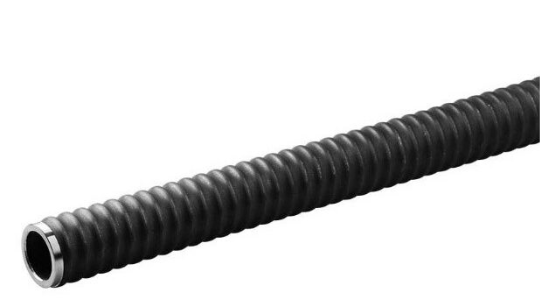
In geotechnical construction, self-drilling soil nails have become a preferred method for stabilizing slopes, retaining walls, and excavation faces—especially in loose or collapsing ground conditions. By combining drilling, grouting, and anchoring into a single operation, these systems offer a fast, efficient, and reliable alternative to conventional soil nailing techniques.

What Are Self-Drilling Soil Nails?

Self-drilling soil nails are hollow steel bars with a sacrificial drill bit at the tip. As the bar is rotated into the ground, grout is simultaneously injected through the hollow core. This process eliminates the need for pre-drilling and casing, making it ideal for unstable or water-logged soils where boreholes might collapse before grouting.

Key components include:

  • Hollow threaded bar (anchor body)
  • Sacrificial drill bit
  • Couplers (for extending length)
  • Centralizers (to maintain alignment)
  • Grout injection system

Where Are They Used?

Self-drilling soil nails are widely used in:

  • Slope stabilization: Reinforcing embankments, hillsides, and cut slopes.
  • Excavation support: Securing vertical or near-vertical cuts in urban construction.
  • Tunnel portals: Providing immediate support in soft ground.
  • Retaining wall reinforcement: Enhancing the stability of shotcrete or soil nail walls.
  • Landslide mitigation: Arresting movement in actively sliding soil masses.

Their ability to be installed quickly and securely in difficult ground makes them especially valuable in time-sensitive or space-constrained projects.

Advantages Over Conventional Soil Nails

  • No pre-drilling required: Reduces equipment needs and speeds up installation.
  • Ideal for collapsing soils: The drill bit and grout stabilize the hole as the nail advances.
  • High pullout capacity: The rough grout column formed during installation enhances bond strength.
  • Fewer construction steps: Drilling, grouting, and anchoring occur in one continuous operation.
  • Adaptable to various ground conditions: Suitable for loose soil, weathered rock, and mixed strata.

Installation Process: Step-by-Step

  1. Positioning Mark the nail layout on the slope or wall face based on design spacing and angle.
  2. Drilling and Grouting Attach the self-drilling nail to a rotary percussive drill. As the bar advances, grout is pumped through the hollow core, filling voids and creating a bond with the surrounding soil.
  3. Coupling (if needed) For deeper installations, couplers are used to extend the bar length mid-drill.
  4. Finishing Once the desired depth is reached, the bar is cut to length, and a bearing plate and nut are installed to transfer load to the surface.
  5. Curing Allow the grout to set before applying any structural loads or shotcrete facing.

Practical Tips for Effective Use

  • Select the right drill bit: Match the bit type to the ground—tungsten carbide for hard rock, chisel bits for soft soils.
  • Use centralizers: These help maintain alignment and ensure uniform grout coverage.
  • Monitor grout pressure: Consistent pressure ensures complete void filling and bond strength.
  • Check corrosion protection: In aggressive environments, use galvanized or epoxy-coated bars.

Limitations to Consider

While versatile, self-drilling soil nails may not be ideal for:

  • Very dense rock: May require pre-drilling or specialized bits.
  • Highly abrasive soils: Can cause rapid wear on drill bits.
  • Underwater applications: Require special sealing and grouting techniques.

Final Thoughts

Self-drilling soil nails offer a practical, efficient solution for reinforcing unstable ground in a wide range of construction scenarios. Their ability to simplify installation while delivering high performance makes them a valuable tool for engineers and contractors working in challenging geotechnical environments.

Share This Post

©goodnessshare . All Rights Reserved