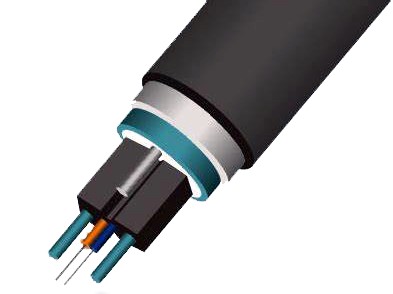
Armoured fibre optic cables are specialised types of cables designed to provide superior protection to optical fibre. Ensuring that data transmission remains reliable even in challenging environments. These cables are widely used in various industries, including telecommunications, military, and industrial sectors. To understand the operating principle of armoured fibre optic cables. It’s important to first grasp the basic functionality of standard fibre optic cables and then examine the role of the armour in protecting these delicate fibres.
1. Understanding Fibre Optic Cables
Fibre optic cables are made of glass or plastic fibres that transmit data as light signals. These cables are known for their high bandwidth capacity, fast transmission speeds, and immunity to electromagnetic interference. A typical fibre optic cable consists of three primary components:
- Core: The core is the central part of a fibre optic cable, typically made from glass or plastic, responsible for carrying light signals. The core’s diameter is extremely small, often just a few microns, and light signals travel through it at high speeds.
- Cladding: The cladding is the layer surrounding the core and is made from a material with a lower refractive index than the core. Its primary function is to reflect light signals into the core using total internal reflection. Ensuring that the signals remain contained within the core during transmission.
- Jacket: The jacket is the outermost layer of the fibre optic cable, typically made from polymer materials like PVC or PE. It serves as a protective layer for the internal fibre. Safeguarding it from physical damage like stretching, bending, and external environmental factors such as moisture, chemicals, or temperature fluctuations.
The core and cladding are made of materials with different refractive indices, which is crucial for the total internal reflection that keeps the light signals inside the core.
2. The Role of Armouring in Fibre Optic Cable
Armoured fibre optic cables are designed to enhance the durability and safety of standard fibre optic cables. The “armour” typically consists of a layer of protective materials such as steel, aluminium, or other metal alloys. This armour layer helps protect the optical fibres from physical damage, such as crushing, bending, or being exposed to harsh environmental conditions.
There are two primary types of armour used in fibre optic cables:
- Single-armoured cables: These cables have one layer of armour, typically made from steel wire or a similar material.
- Double-armoured cables: These cables have two layers of protective armour, offering even more robust protection.
3. How Armoured Fibre Optic Cable Works
The operating principle of armoured fibre optic cables is quite similar to standard fibre optic cables, but with the added benefit of physical protection. Here’s how they work:
- Light Transmission: Just like standard fibre optic cables, armoured cables carry data as light signals through the core of the fibre. The light signals travel along the fibre, using total internal reflection to maintain their speed and integrity.
- Protection from Physical Damage: The armour layer prevents external forces, such as pressure, impact, or rodent bites, from damaging the internal fibre. In harsh environments where regular cables may be vulnerable to external damage, armoured cables ensure the fibres remain intact.
- Environmental Protection: In addition to protecting from physical damage, armoured fibre optic cables also offer resistance to extreme temperatures, moisture, and corrosive elements, ensuring reliable data transmission in challenging conditions.
4. Advantages of Armoured Fibre Optic Cable
Armoured fibre optic cables offer several benefits over non-armoured cables, including:
- Durability: The armour protects the fibres from mechanical damage, extending the lifespan of the cable.
- Reliability: With the added protection, armoured cables ensure continuous and uninterrupted data transmission, even in challenging environments.
- Security: These cables provide enhanced security, as they are less prone to damage from external elements or malicious activities, such as cable tampering.
Conclusion
Armoured fibre optic cables combine the high-performance capabilities of fibre optics with the added benefit of robust physical protection. By safeguarding the optical fibres from environmental and physical damage, these cables ensure reliable and secure data transmission in the most demanding environments. Whether used in telecommunications, military, or industrial applications, armoured fibre optic cables are a critical component for maintaining efficient and uninterrupted data communication systems.